
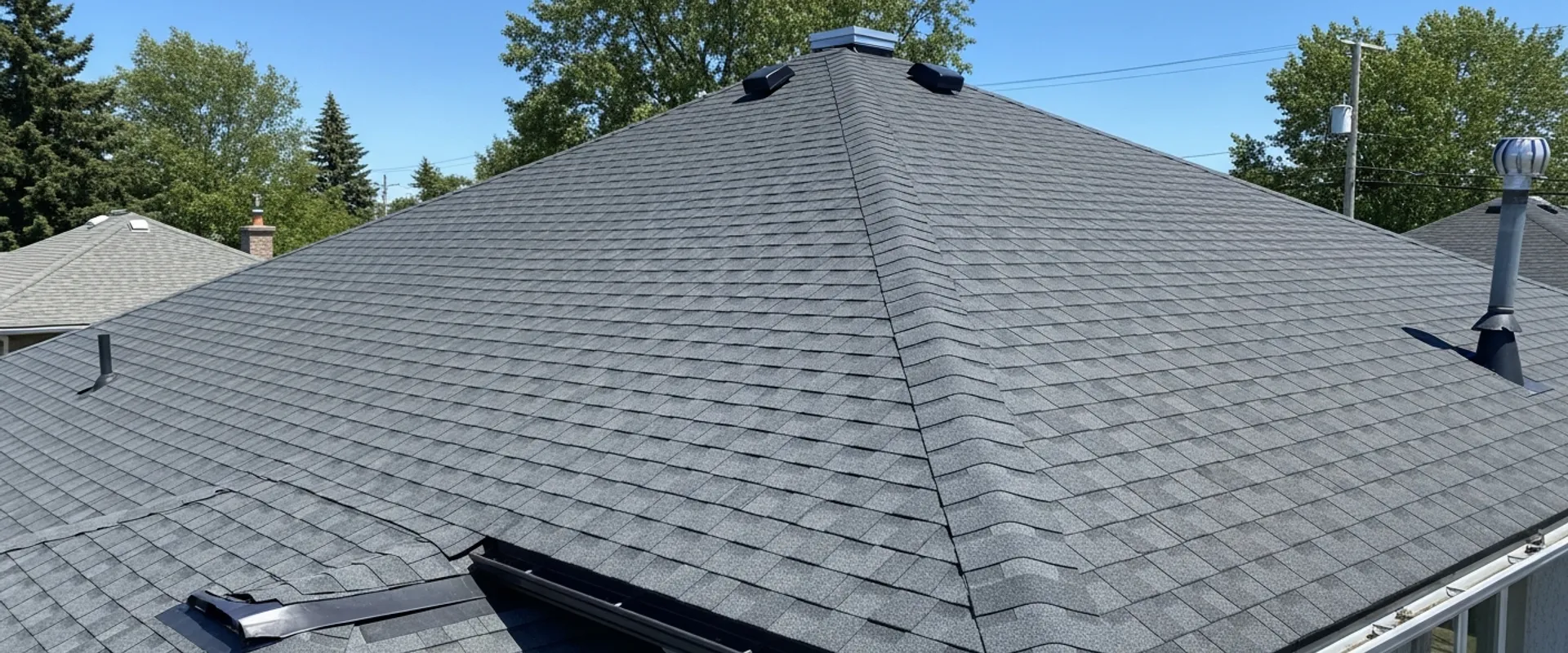
Design reference — not a photograph of a completed client project.
Roof Replacement in the GTA, Built for Freeze and Thaw
Asphalt shingle and flat-roof replacement sized for GTA weather — ice-and-water protection at eaves and valleys, ventilation that prevents ice damming, and a full tear-off inspection of the deck before anything new goes on.
What is roofing at Master Residential?
TL;DR. Master Residential replaces asphalt shingle and flat roofs across Toronto and the GTA, built for freeze-thaw and ice damming — full tear-off, deck inspection, ice-and-water membrane, new flashing and proper ventilation on every job, with property protection and a magnetic nail sweep at cleanup.
A GTA roof lives a hard life. Freeze-thaw cycles work at every fastener and seam from November to April, ice dams back water under shingles at the eaves, summer sun cooks the south face, and wind tests the edges every storm. Roofs here rarely fail in the middle of the field — they fail at the details: the valleys, the flashing around chimneys and vents, the eaves where ice sits. That is why a proper replacement is an assembly, not a shingle swap, and why the details are where the money should go.
Every replacement we do starts the same way: a full tear-off down to the deck, because what is underneath decides what the new roof needs. Soft sheathing gets replaced, the attic side gets checked for the ventilation and insulation problems that cause ice damming, and the quote specifies the whole assembly — underlayment, ice-and-water membrane, new flashing, vents — so nothing essential is quietly ‘reused’ to hit a lower number.
What's included
- Full tear-off down to the deck
- Deck inspection and replacement of damaged sheathing
- Ice-and-water membrane at eaves, valleys, penetrations
- New flashing at chimneys, walls and vents
- Ridge and soffit ventilation assessment
- Property protection and magnetic nail sweep
- Flat-roof membranes for low-slope sections
Repair or Replace — How Do You Know What Your Roof Needs?
The signs are readable once you know them. Widespread curling, cracked or missing shingles and heavy granule loss in the gutters mean the field is at the end of its life. A single leak around a chimney or a vent, on an otherwise sound roof, is usually a flashing repair. The dividing line is extent: localized damage on a younger roof earns a repair; systemic wear across the field means repairs are postponements.
The attic tells the other half of the story. Moisture on the underside of the sheathing, matted insulation or blocked soffit vents point to ventilation problems that will shorten the life of any new roof installed over them. We inspect both sides before recommending anything, and if a repair is the honest answer, that is the recommendation you get.
Why Do GTA Roofs Fail Early, and How Do You Stop Yours?
The mechanism behind most premature failures here is ice damming. Heat escaping into the attic warms the roof deck, snow melts high on the slope, and the water refreezes at the cold eaves. The ice ridge that forms backs meltwater up under the shingles, and from there it is into the soffit, the walls and the ceiling. The roof gets blamed, but the cause is usually heat loss and ventilation — the shingle is the last line, not the first.
Stopping it is an assembly job: insulation and air sealing to keep heat in the house, balanced soffit and ridge ventilation to keep the deck cold, and ice-and-water membrane at the eaves and valleys for the winters that test the system anyway. Add new flashing at every penetration — reused flashing is where ‘new’ roofs leak — and the roof is built for the climate it actually faces, including the freeze-thaw swings along the escarpment and the lake.
What Actually Happens on Roof Replacement Day?
The crew arrives early and the first hour is protection, not demolition: tarps and plywood over gardens, the air-conditioning unit and anything delicate, vehicles moved, and the disposal bin placed where you agreed it would go. Then the tear-off — everything down to the deck — followed by the deck inspection, where any soft or damaged sheathing gets replaced before the new assembly starts. On a typical GTA home the whole job runs a day or two, weather permitting.
The end of the job is its own discipline: a magnetic sweep of the lawn, garden and driveway for nails, the bin hauled away, and a walkthrough of what went on — membrane locations, flashing, vents — so you know what you bought. If weather turns mid-job, the roof is left watertight overnight, never open. You do not need to be home, but you will know the plan for each day in advance.
What Else Should Happen While the Roof Is Open?
A roof replacement is the one time everything adjacent is easy to reach, and a few add-ons are disproportionately good value in that window: gutters and downspouts past their life, tired skylights, bathroom fans still venting into the attic instead of outside, and attic insulation that should be topped up while the ventilation is being sorted. Each is a small line item that is awkward and expensive to revisit later.
Low-slope sections deserve their own mention. Porches, dormers and the flat or near-flat roofs over rear additions were never meant for shingles, and shingling them anyway is a slow-motion leak. These sections get a proper flat-roof membrane specified for the pitch — a different material, installed as its own system, tied into the shingled field at the transition.
Why homeowners choose Master Residential.
Details, Not Just Shingles
Roofs fail at valleys, flashing, vents and eaves — so that is where the assembly is built properly: new flashing at every penetration, ice-and-water membrane where water threatens, correct details at every transition. The quote specifies the whole assembly in writing, so nothing essential is quietly reused to hit a lower number.
Ventilation Treated as Roofing
Ice damming starts in the attic, not on the shingles, so the attic side is inspected on every job — insulation levels, air sealing, soffit and ridge ventilation. A new roof over a hot, wet attic is a short-lived roof, and we would rather fix the cause on this visit than sell you the same symptom twice.
Your Property Respected
Gardens, siding, the air-conditioning unit and the driveway are protected before tear-off, the bin goes where you agreed, and the site gets a magnetic nail sweep at the end of the job. A re-roof drops kilograms of debris from height — the difference between crews is what happens to everything below.
Managing it yourself vs one accountable team
| Coordinating trades yourself | With Master Residential |
|---|---|
| The quote is for ‘new shingles’ and you learn later the flashing, vents and underlayment were reused to hit the number. | Every quote specifies tear-off, underlayment, ice-and-water membrane, new flashing and ventilation — the whole assembly. |
| New shingles go straight down over soft, spongy sheathing, and the new roof telegraphs dips and waves within a season. | The deck is fully inspected after tear-off, and any damaged sheathing is replaced before anything new goes on. |
| The ice dams return the very first real winter, because nobody looked at why they were forming in the first place. | The attic side is assessed too — insulation, ventilation, air sealing — so the cause is addressed, not just the symptom. |
| Your garden beds and the car in the driveway take the fall for the tear-off, and nails turn up in the lawn for months. | Gardens, siding and the driveway are protected before tear-off, and the site gets a magnetic nail sweep at the end. |
| The flat, low-slope roof section over the rear addition gets standard three-tab shingles it was never rated to take. | Low-slope sections get a proper flat-roof membrane specified for the pitch, tied cleanly into the shingled field. |
Roofing — questions homeowners ask
How do I know if my roof needs replacing or just a repair?
Extent decides it. A single leak around a chimney or vent on an otherwise sound roof is usually a flashing repair. Widespread curling, cracked or missing shingles, heavy granule loss in the gutters, or leaks in several places mean the field is worn out and repairs are postponements. We inspect the roof and the attic side, and if a repair is the honest answer, that is what we recommend.
How long does a full roof replacement take on a typical house?
On a typical GTA home, tear-off to finished roof runs a day or two of on-site work, weather permitting — longer for large, steep or complex roofs, or where deck repairs are extensive. The schedule is set after the inspection, and you will know the plan for each day in advance. If weather turns mid-job, the roof is left watertight overnight, never open.
Can a roof be replaced in winter in Ontario?
It can be done, but it is not ideal. Asphalt shingles need moderate temperatures to seal properly, and cold-weather installs require extra care that not every crew takes. Emergency winter work happens when it has to — a failed roof does not wait for May — but a planned replacement is best scheduled in the milder months. If your roof is borderline heading into winter, get it assessed in the fall.
What causes ice dams, and will a new roof stop them?
Ice dams are caused by heat escaping into the attic: the deck warms, snow melts high on the slope, and the water refreezes at the cold eaves, backing meltwater under the shingles. A new roof helps — ice-and-water membrane at the eaves is the backstop — but the real fix is insulation, air sealing and balanced ventilation keeping the deck cold. We assess the attic side on every job so the cause gets addressed, not just the symptom.
What does a roof replacement cost in the GTA?
There is no honest number without an inspection. Cost is driven by roof size and pitch, how many old layers need to come off, the condition of the deck underneath, the material and the detail work — chimneys, valleys, skylights, flat sections. What we commit to is a written quote that specifies the whole assembly — tear-off, membrane, flashing, ventilation — so you can compare it line by line against any other quote.
Do we need to be home, and how should we prepare?
You do not need to be home. Preparation is simple: move vehicles out of the driveway, take pictures and mirrors off walls that back onto the attic — tear-off vibrates the whole house — and cover anything stored in the attic that dust would ruin. Let neighbours know the dates as a courtesy. We handle the rest, including protection for gardens and the magnetic nail sweep at the end.
Get a Straight Answer on Your Roof
Tell us your roof’s age and what you have noticed — leaks, curling shingles, ice damming, a stain on the ceiling. We will inspect the roof and the attic side, tell you honestly whether it needs repair or replacement, and quote the work in writing.
Serving Toronto, Mississauga, Vaughan, Oakville, Burlington and the Greater Toronto Area.